First of all I would like to make things simple. This article contains the basic concept of the topic.
The concept of programmable computer was first invented by Charles Babbage. He is also called as "father of the computer". His computer name is Difference Engine.
more information on Difference Engine:
Suggestions are accepted. Mention your views in comment box below.
Thank You.
Computer:
Computer is a device which takes information from user as input and then produces a required information as output. It is also called as PC in regular use. PC stands for Personal Computer.
Computer does not only mean that we work on it by sitting in front of a screen. There are computers in early days which have no screen or mouse, for example
Astrolabe(used for navigation purpose) and Abacus(used as a math tool similar to calculator).
more information on Astrolabe: https://simple.wikipedia.org/wiki/Astrolabe
more information on Abacus: https://simple.wikipedia.org/wiki/Abacus
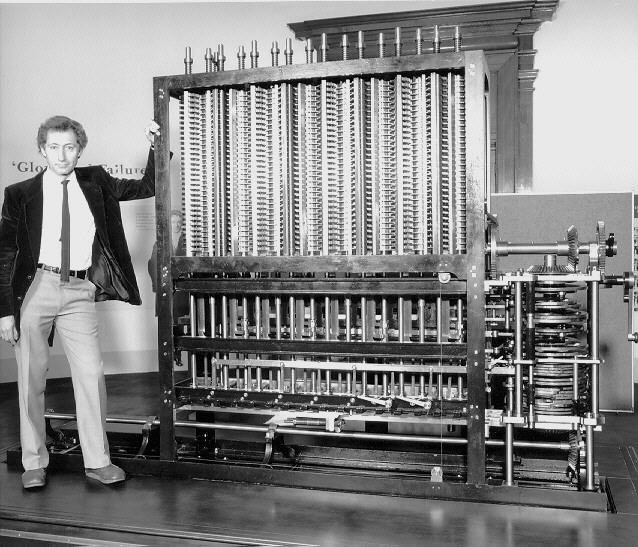 |
| Charles Babbage and his First Mechanical Computer in early 19th Century |
The concept of programmable computer was first invented by Charles Babbage. He is also called as "father of the computer". His computer name is Difference Engine.
more information on Difference Engine:
https://en.wikipedia.org/wiki/Difference_engine
Coming to digitization of computers, Turing Machines are on its toes in early 20th century. Turing Machine was first developed by a pioneering computer scientist Alan Turing.
more information on Turing Machine: https://en.wikipedia.org/wiki/Turing_machine
Size of computer depends on the components used in making it. If the size of components are big, then the computer will eventually turn to be big.
But these days components used in computers got smaller and powerful, eventually computers became smaller and effective to use. They can work on different inputs given by the user at a same time and can produce efficient outputs in no time.
more information on Desktop Computers: https://en.wikipedia.org/wiki/Desktop_computer
Components present in these modern computers are as follows
 |
| Alan Turing and his Turing Machine in early 20th Century |
Coming to digitization of computers, Turing Machines are on its toes in early 20th century. Turing Machine was first developed by a pioneering computer scientist Alan Turing.
more information on Turing Machine: https://en.wikipedia.org/wiki/Turing_machine
 |
| Desktop Computers in 21st Century |
But these days components used in computers got smaller and powerful, eventually computers became smaller and effective to use. They can work on different inputs given by the user at a same time and can produce efficient outputs in no time.
more information on Desktop Computers: https://en.wikipedia.org/wiki/Desktop_computer
Components present in these modern computers are as follows
Components of a computer:
- Motherboard
- Processor
- Primary Storage
- Secondary Storage
- Switch Mode Power Supply
- Input Devices
- Output Devices
Components explanation will be given in the following posts.
Suggestions are accepted. Mention your views in comment box below.
Thank You.

No comments:
Post a Comment